The Dog Digestive System
Good Health Depends On It
The dog digestive system is where good health starts and continues for life. Dog digestion can also be the place where health problems begin. If your dog's food is not digested and assimilated properly, all other parts of the body will pay the price. We are what we eat, after all. That goes for dogs too.
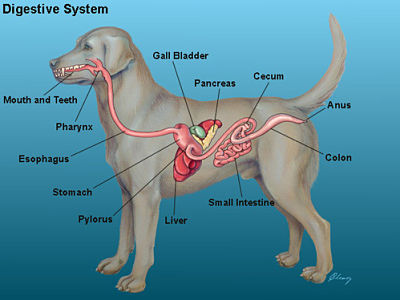
Your dog's digestive system is responsible for three things:
- digestion of food
- absorption of nutrients
- preventing the entry of toxic, disease causing substances into the body.
All mammals have the same organ systems. They may differ slightly in some ways according to different species requirements, but mostly they are the same. The illustration above does a good job of showing you the canine digestive system organs.
The Important Dog Digestive System Organs
Mouth and Teeth are the very start of the dog digestive system. The food is cut, sliced or torn to the correct size by the teeth. Then it goes straight from the mouth, lubricated by saliva, and guided by the tongue, down into the esophagus. Here's an interesting article I wrote about the differences and similarities between a dog's mouth and a human mouth, and the role those differences play in regards to digestion.
Esophagus is the connecting tube leading from the mouth to the stomach. It is a muscle and contracts in wave like motions, to move the food along the path to the stomach. The expression ' wolfing down ' your food, comes from the decsription of how your dog swallows his food.
Stomach is the storage area. Here the food is further broken down into a very thick liquid called chyme. The stomach works like a cement mixer, mixing and grinding and liquifying the food. The environment in your dog's stomach is extremely acidic, about
1-2 PH. This hydrochloric acid is a very strong chemical. It would burn your hand if you were to touch it. A dog's stomach acid is way
more acidic than human stomach acid.
The lining of your dog's stomach is
covered with a thick mucus. This mucus naturally protects and prevents the stomach from digesting
itself, due to the strong acid. Together with hydrochloric acid and some enzymes, the food is now ready for complete digestion in the small intestines.
Small Intestine is the next stop on the journey of dog digestion. Basically, the small intestine is a long hollow tube. It is about four times the length of your dog's body. Within the small intestines there are openings that let digestive juices enter from the pancreas and gallbladder.
The lining of the small intestine has millions of little finger type things called villi. These little villi increase the surface area of the small intestine to better assimilate and absorb nutrients. Almost all nutrients are absorbed from the small intestines into the
bloodstream, and then travel though out the body to be used by the cells.
The main job of the small intestine is to absorb nutrients from the liquid food that has been broken down by the stomach. The canine intestinal system is shorter than that of a human. This is because for proper dog digestion, as a carnivore, your dog needs a faster processing time for all the meat protein he eats.
Pancreas secretes enzymes that help to further break down proteins. The pancreas is also an endocrine gland that regulates blood sugar.
Gallbladder stores and regulates the release of bile. Bile is needed to break down fats.
Large Intestine is also known as the colon. The colon has the important job of saving water and mineral electrolytes from the food that has passed through the whole system. It keeps hydration in the body at a constant level.
Bacteria in the small intestine helps to break down the very last, hard to digest material. Feces are formed and stored here and await exit through the rectum, which is the last stop along the dog digestive system pathway. Waste is that's left. Dog poop in other words.
The Sum Total of Dog Digestion
I hope this brief description of the journey along the dog digestive system pathway has helped you to understand what happens to the food after your dog actually eats it. Much happens on the inside of your dog's body that you cannot see.
The best way to keep your dog's digestive system organs working efficiently is by feeding good natural dog food. A poorly functioning canine digestive system is the root cause of all disease.
Feeding dogs appropriately for their species ensures digestive system health and directly affects your dog's Immune System on which all good health depends. The bacteria in your dog's gut microbiome forms 70% of your dog's total immune system function.
If you are dealing with a dog health problem, no matter what it is, you need not look any further than your dog's digestive system.
Go Back to Canine Body Organ Systems
New! Comments
Have your say about what you've just read here. Use the comments box below.
Sharing is appreciated!
Recent Articles


-
Kallie the Cat That Stole My Heart.
Nov 28, 24 07:33 AM
I never was a cat person, I don't know why? One day my wife noticed a female cat hanging around the house. She said... that cat looks really hungry. -
My Dog is Losing Weight On a Yeast Free Diet.
Sep 22, 24 08:25 AM
My dog is three years old and has had several yeasty ear infections. I’m trying to treat them holistically, but she also has food allergies and cannot -
No more corn chip smell
Sep 16, 24 08:52 AM
Our dogs were smelling like corn chips and their nails were dark we started with baking soda and green tea to help clean them up and it's better but they
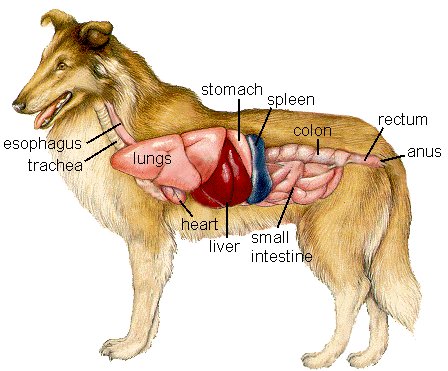
What goes in one end as food must come out the other end as poop.
The quality of food eaten equals the quality of health your dog will enjoy.
Appropriate feeding of a natural raw food diet maintains the health and integrity of your dog's digestive system
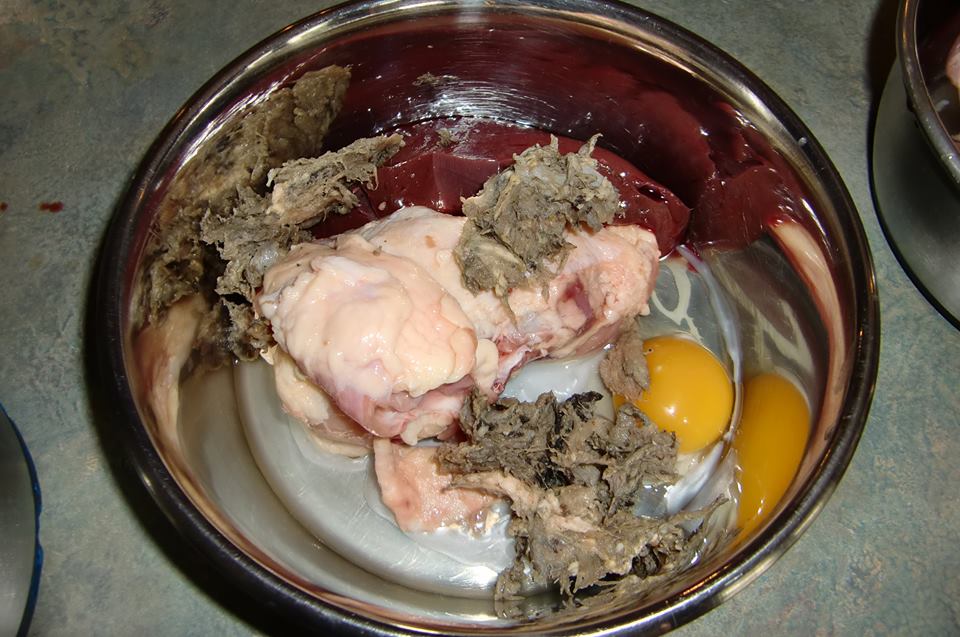
Meat
Bones
Organs
Eggs
Fish
