Dog Allergies
A Conundrum Indeed!
Dog allergies is a diagnosis that covers many things. When your vet says your dog has allergies it's a way to explain a whole range of dog health problems, like dog rashes, dog itchy skin, dog hot spots, dog hair loss, chronic dermatitis, and more.
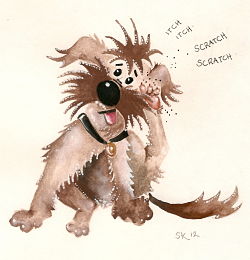
Any dog who has problems like these, is not a healthy dog. Bottom line!
Dogs shouldn't have these problems at all.
Dogs are having more allergic reactions than ever before and the canine allergies epidemic is getting worse, not better.
Dog Allergy Symptoms
Dog allergies may be characterized by these symptoms.
- itching, scratching
- rashes
- sneezing and nasal discharge
- red eyes
- ear problems
- swollen itchy paws
- bad body odor
- oozing skin sores ( hot spots )
- digestive system disorders
The Dog Allergy Problem
Appears to Be a Riddle
To understand the mystery, let's look at the definition of Conundrum so you can see why I use that word to describe the dog allergy problem.
- A riddle whose answer has an unexpected twist.
- A truth that evades resolution, an intricate and difficult problem
So why is it so hard to solve dog allergy symptoms? Because...
A dog allergy reaction is NOT a stand alone health problem.
Dog allergies are a symptom of a deeper problem happening
inside your dog's body.
According to
Webster's New Universal Unabridged Dictionary:
An allergy is a condition of unusual sensitivity to a substance or substances which, in like amounts, do not affect others.
In other words, your dog is reacting to substances which really shouldn't, under normal circumstances, bother him.
Remember these words ..." under normal circumstances ".
What Is An Allergen?
Allergens are usually protein substances but, can be non organic things too, such as light, cold and heat. An allergen is any substance which causes an allergic reaction. Allergens can be the underlying cause of other dog health problems too. There are three main types of dog allergies.
Allergens cause inflammation. The allergy symptoms will show up
as inflammation either externally ( on the outside of the body
) or internally ( on the inside of the body )
- inflammation of the eyes (conjunctivitis)
- inflammation of the ears ( otitis )
- inflammation of the skin ( dermatitis )
- inflammation of the digestive system ( gastritis, enteritis )
- inflammation of the anal glands ( anal sacculitis )
- inflammation of the intestinal system ( colitis, IBD, Crohn's )
- joint inflammation and pain ( arthritis )
- inflammation of the respiratory system such as sneezing, coughing, breathing problems ( bronchitis )
Dog allergy reactions are the same as human allergy reactions. Dogs and people have an Immune System to help fend off and protect against invading allergens and pathogens. If this is not happening, it means your dog's immune system...
- is unable to work hard enough,
- or is reacting incorrectly to what should be a harmless substance
If that's the case, then the reactive allergy symptoms that you can see are not the real problem. The real problem lies with your dog's immune system. Since 70 % of your dog's Immune System resides within his gut micro biome environment, let's start there!
Ask yourself this question.
Is it possible that my dog's immune system isn't working properly to fend off allergens and pathogens because his gut microbiome is out of balance?
If so...
- That would make the allergen that causes the inflammation, a symptom, wouldn't it?.
- It would also make Immune System malfunction a symptom too, wouldn't it?
- So logically, the gut microbiome imbalance would be the root source of your dog's allergy problem. Right?
The allergy response therefore, is not the real problem. Your dog's allergy symptoms are the result of an imbalance in the gut micro biome, which has...
- created a gut flora ( bacteria ) imbalance
- damaged the intestinal mucosal lining creating dysbiosis aka leaky gut
- caused your dog's immune system to stop working efficiently, or even worse, work against itself ( autoimmune ).
Here's How You Can Solve
the
Conundrum of Canine Allergies

So if you have an itching dog or any of the other dog allergy symptoms listed above, your goal should be to get back to more normal healthy circumstances.
Forget about trying to get rid of your dog's allergy symptoms. Focus on restoring balance to your dog's gut microbiome.
- Healthy gut flora balance =
- Fully functioning immune system =
- An end to dog allergies
Have a Question About Dog Allergies? Ask it here.
Is your dog having a problem with allergy symptoms? Do you need help to figure it out and find a solution? Your question is welcome here. Go ahead...ask!
What Other Visitors Have Said
Click below to see contributions from other visitors to this page...
Brewers yeast 
So my dog was diagnosed by the vet as having an allergy to brewers yeast.
He’s currently fed Orijen all original, with a PURINA probiotic added. …
Dog Allgeries & Food High in Histamine
When considering a diet for dogs with hyperactive immune system due to allgeries, should foods high in histamine be avoided to promote gut health?
…
Allergic to Everything and Diagnosed with IBD
I have a three year old chihuahua that has been tested for allergies and shows that she is allergic to all proteins. White fish is the lowest on her allergy …
Mini Border/American Shepherd 30 lb Runt
Aloha,
My 2 yr old Border Collie mix was diagnosed with gastroenteritis.
She vomited for 5 days plus blood in her stool with smelly gas. Her stool …
Lifelong Dog Allergy Due to Vacination
Is it true that a dog can develop an allergy to beef, beef dairy and/or chicken due to vaccinations they received as puppies?
Is there an accurate, …
Sherry
My Havanese dogs are nearing 9 years old and have struggled with itching skin and rear ends since birth. One of them especially, is worse than the other, …
cocker spaniel puppy with severe allergies.
My wife and I just brought home an American Cocker Spaniel Puppy, 11 weeks old.
About a week after he arrived, he began itching severely with red, …
My Dog is Having Welts Allergies to Everything
My dog literally has in the last month got welts out of no where. 65lb 10yr old Dutch shepherd.
I have been giving her now different food... Acana, …
Lost 6 kgs weight in 2 months
My dog is Boxer breed and he is 1 year old.
In the past he was having allergies so I changed his diet to home cooked, with the help of a dog nutritionist. …
6 Year Old GSD Bleeds From Nose
Hello,
My GSD bleeds from the nose on monthly basis.
Went to vet, and he said it's common, but we are worried. Also, he's got hot spot on his leg …
Where Do I Start?
My dog has gone on a downward spiral since our vet told us to switch from a grain free food, to one with grains.
He has gone from a healthy dog to …
Allergy to Everything!
My 3 year old Golden Doodle petite seems to be allergic to every meat I have given her.
I always have to stop feeding her something, to start something …
Pup skin allergies
I have a 3yo yellow lab.
He has extremely sensitive skin. I think it mostly relates to outside factors, but could be wrong. When we mow, or when pollen …
Anal Glands & Allergies
My 5yr old working Cocker suffers from a number of allergies, environmental and food.
He's is itchy but not too bad...no major hot spots really. …
Labrador Retriever Eating His Paws
I feed my dog home made food. 60% beef, 20% veggies 20%brown rice.
He had developed allergies prior to switching from commercial food. Can't pinpoint …
Sensitive Collie with Allergies
Our 1.5 year old rough collie has symptoms of the occasional runny nose (clear), face looks puffy or distressed, eyes occasionally have discharge which …
Cane Corso With Constant Licking of Paws and Severe Ear Infections
My Cane Corso has had constant back to back ear infections. The culprit is yeast.
We have determined one of the causes is chicken so we have cut that …
Help for Dog Allergies!
My dog has every symptom that you talk about in this article. Can you please help me fix her diet? I feed homemade dog food which is a constant diet of …
All of the above!
It sounds like you are writing about my dog Gracie.
I'm trying really hard to help her.
I was just discussing today about rotating her food.
…
Boxer with Allergies
My boxer started having allergies at 6 months old.
I had her on hills science diet chicken and barley since birth.
She started with red eyes, licking …
4 Yr Old German Sheppard Salmon & Pea Dry Food
Our 4 yr old German Sheppard is digging and itching A LOT everywhere. No sores, and not on the pads of his feet, just very dry skin under the fur. …
Blue Pitbull With Protein Allergies
My veterinarian said my 5 yrs old blue pitbull has protein allergies and put my dog on Hills Prescription z/d.
I don't think it's healthy for my dog …
Catahoula With Ongoing Digestive Issues and Other Dog Health Issues
My 3 year old Catahoula, Alamo, developed IMHA at 6 months old, following the completion of his puppy shots.
The cause of the IMHA was determined to …
Shi-Poo With Dog Allergies
Hi Sandra,
My Shi-poo had a bout of allergies last fall and scratched some of his hair out and had a few hot spots.
About 4 weeks ago he started …
Candida Albicans
Thank you for providing this information to those of us who are distressed about the health of our dogs.
Our son has a 3 year old blue nose pit bull. …
Allergies & Yeast & Leaky Gut, oh my!
Hi there!
Thank you so much for the wealth of information provided on your site! When your furbaby isn't well, sometimes you just don't know where to …
Possible dog allergy?
So my 7 yr old golden retriever was feed Acana Grasslands, then pork and squash and mixed in with Orijen freeze dried Regional Red.
He always had …
My dog is allergic to chicken. Will he ever be able to eat chicken again?
My dog is allergic to chicken. When he eats chicken dog food he gets diarrhea.
I've read your page on types of dog allergies and now I suspect …
Skin Allergies 
I have a 2 and a half year old pit. She is about 50 lbs.
When we got her she was 12 weeks old. She was healthy. The only thing we noticed was a little …
New! Comments
Have your say about what you've just read here. Use the comments box below.
Sharing is appreciated!
Recent Articles


-
Kallie the Cat That Stole My Heart.
Nov 28, 24 07:33 AM
I never was a cat person, I don't know why? One day my wife noticed a female cat hanging around the house. She said... that cat looks really hungry. -
My Dog is Losing Weight On a Yeast Free Diet.
Sep 22, 24 08:25 AM
My dog is three years old and has had several yeasty ear infections. I’m trying to treat them holistically, but she also has food allergies and cannot -
No more corn chip smell
Sep 16, 24 08:52 AM
Our dogs were smelling like corn chips and their nails were dark we started with baking soda and green tea to help clean them up and it's better but they
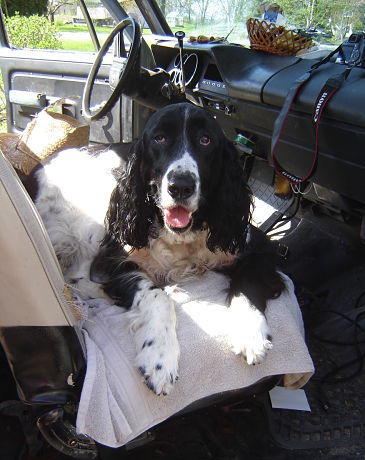 This is Pager, my dog with severe allergies.
This is our beautiful English Springer Spaniel named Pager. He came to us when he was about 4 with one of the worst cases of dog allergies that I have ever seen.
It took about 2 years for Pager to fully recover from his itching, scratching, oozing, smelly odor, hair loss, ear infections, diarrhea, sinus and breathing problems.
Pager's previous owner had done extensive allergy testing. He was allergic to almost everything. Pager's allergies included substances from all three types of dog allergies.
Here are some examples of what he was allergic to...cats, grass, household dust, beef, chicken, common summer pollens, mold, his own skin dander and saliva. He was allergic to himself!
So you tell me...how was I supposed to eliminate all those allergens? I had cats, dust, grass and a dog who was allergic to himself!
YIKES!!!
As I said, it took about 2 years to get Pager back to more ' normal circumstances '. It wasn't fun for him or me, but we did it.
It took a lot of patience, persistence and trust in the body's own ability to heal itself when given the right help.
Pager passed away at 16, leaving me heart broken but I am so grateful that he had 12 wonderful years living allergy symptom free.
 Pager with his friend Teddy, not long before he died. Best friends forever! I look at this picture and I see Teddy's sad eyes...Ted knew Pager would leave us soon.
It has been the pleasure of my life to have been able to return a dog as sick as Pager was, back to good health so he could enjoy 12 wonderful years free of the health problems that plagued him throughout his younger years.
Pager lived the rest his life free of allergy symptoms and cured from Candida Albicans which made a mess of his Immune System and gut microbiome.
 Sandra and Pager
All dogs are wonderful.
Some dogs are special.
Pager, your place in my heart is your special place forever!
